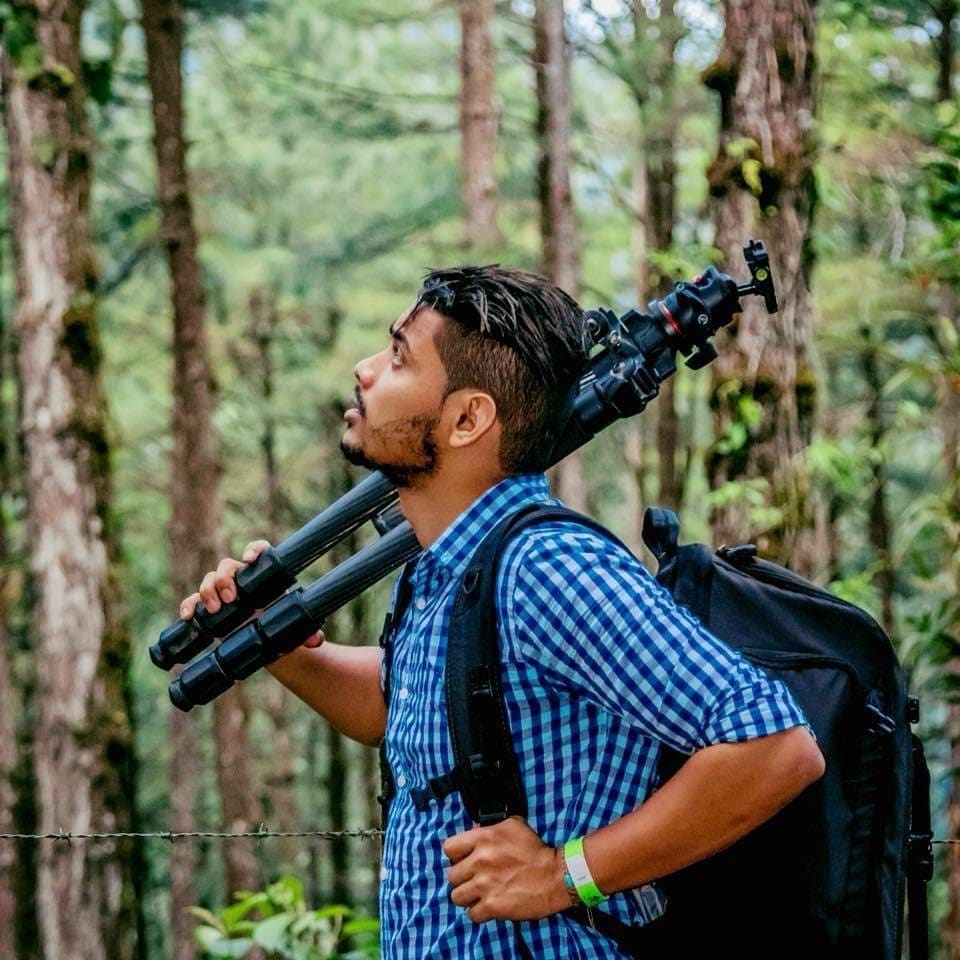
I've been guiding birding tours in La Fortuna since 2015. In that time, I've recorded over 420 species within a 90-minute radius of town — and I'm still adding new ones. La Fortuna sits at the intersection of Caribbean lowland forest, mid-elevation cloud forest, and open wetland: three distinct ecosystems that together make it one of the richest birding zones in Central America.
This guide covers the birds I'm most asked about, the hotspots I actually take clients to, and the practical information that tour aggregators never publish. If you're planning a birding trip to Costa Rica, bookmark this page.
6 Must-See Birds in La Fortuna
Species I reliably show clients — with the exact spots and times that work.
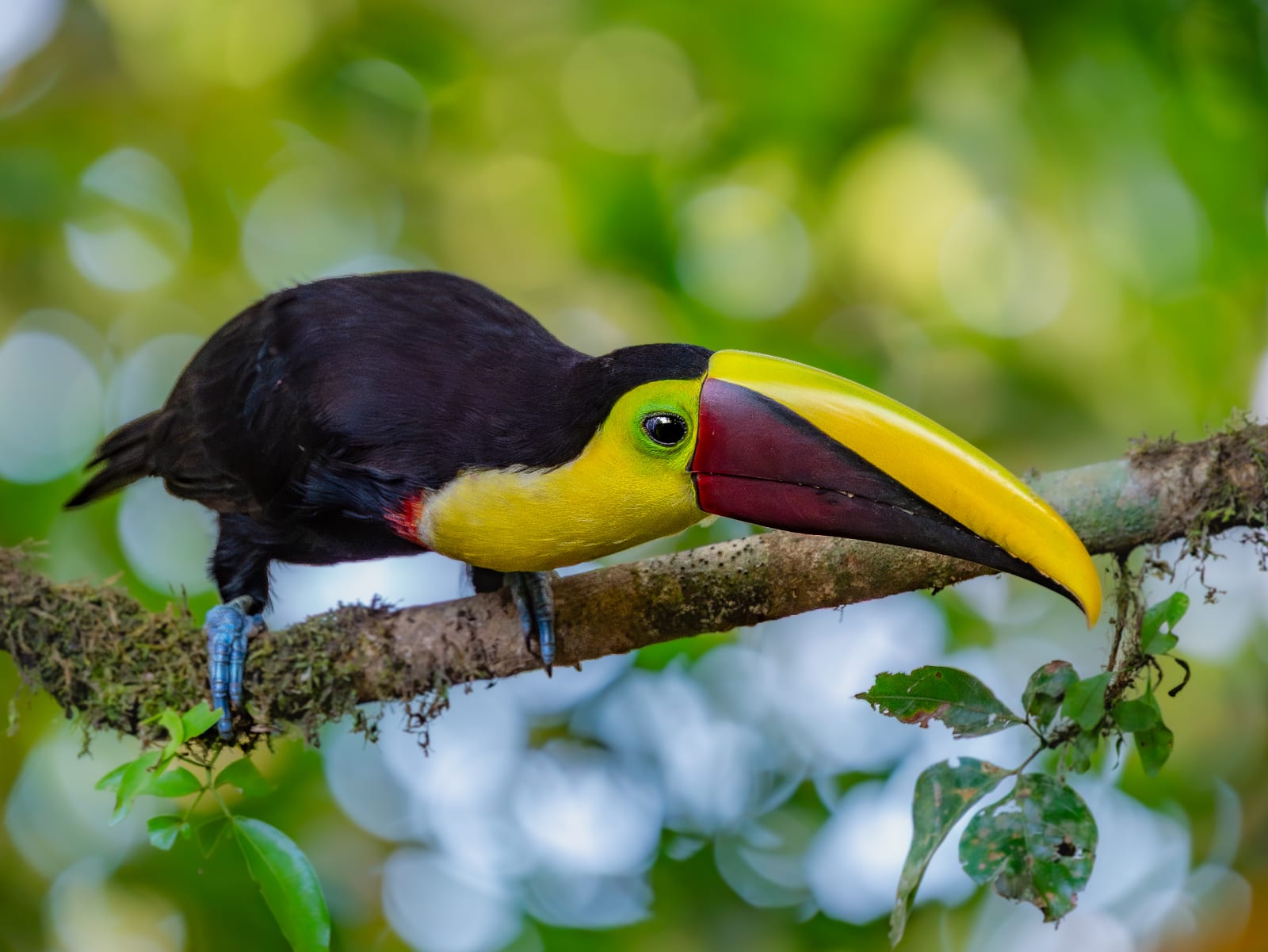
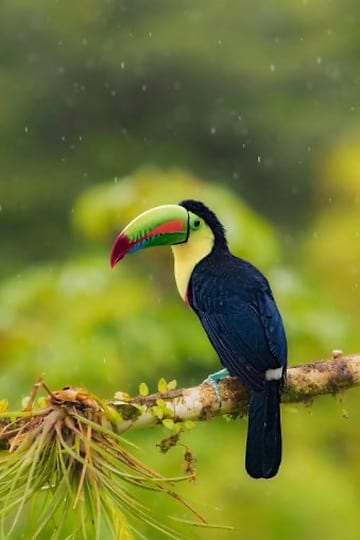
Keel-billed Toucan
Ramphastos sulfuratus
Costa Rica's most iconic bird. Their candy-colored bills are unmistakable and they tend to perch openly at forest edges, making them a reliable first sighting for any birder visiting La Fortuna.
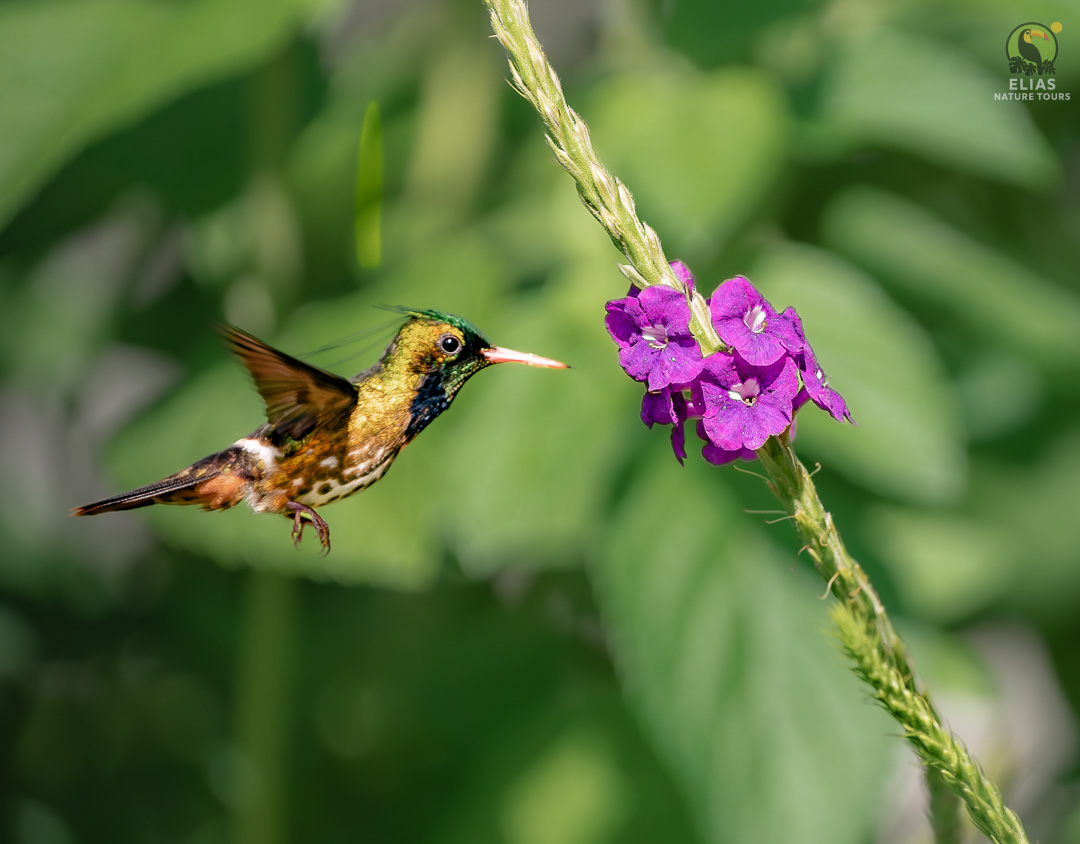
Violet Sabrewing
Campylopterus hemileucurus
The largest hummingbird in Central America and one of the most dramatic. Males are deep violet-blue with white tail spots. They dominate feeders at the Arenal Observatory and reward photographers with spectacular flight shots.
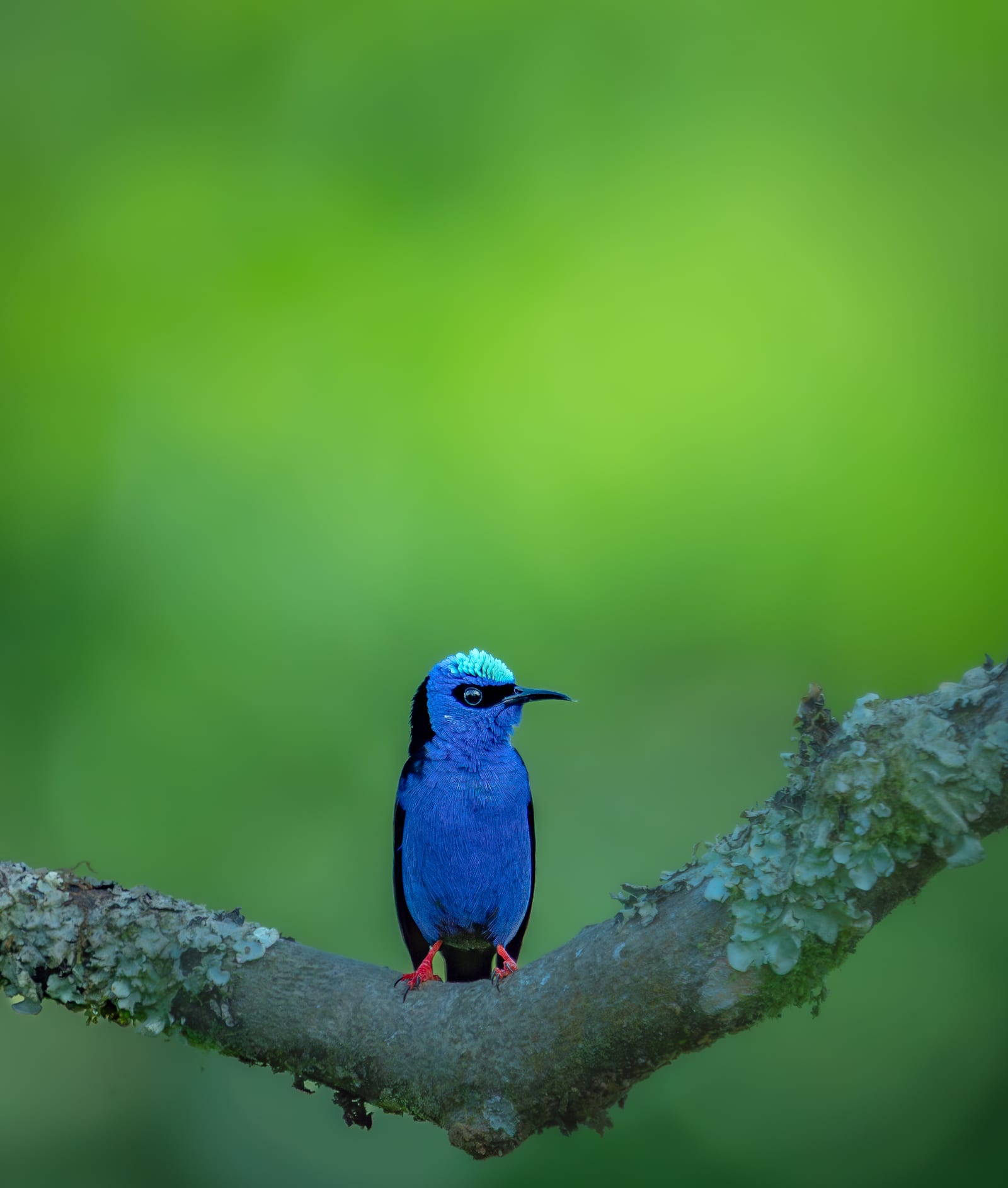
Red-legged Honeycreeper
Cyanerpes cyaneus
A jewel-toned tanager relative that moves fast through the mid-canopy. Despite its electric-blue plumage in males (with the diagnostic bright red legs that give it its English name), it travels in mixed flocks at fruiting trees — a cluster of 5–6 tanager species at one tree is not uncommon in La Fortuna.
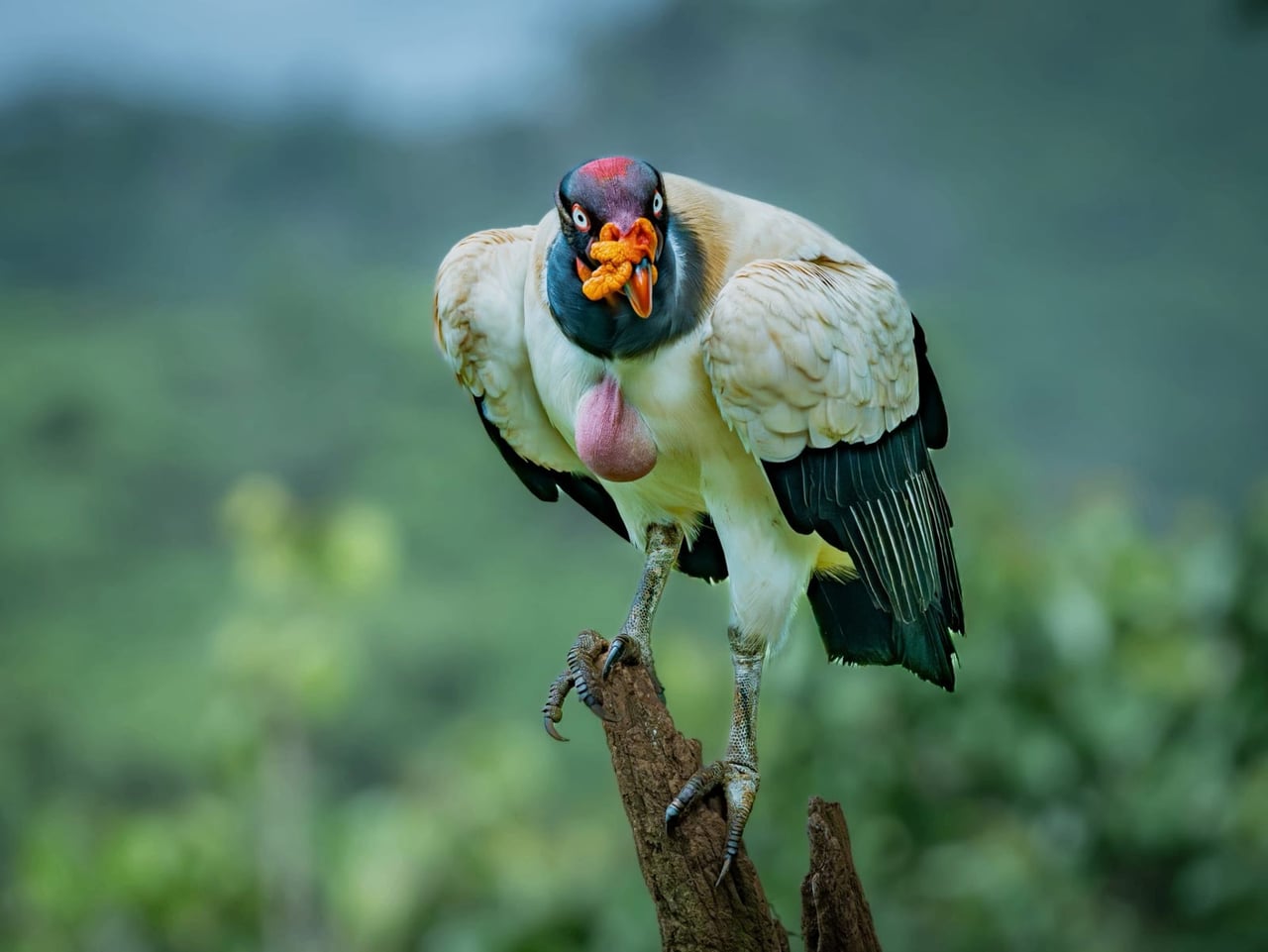
King Vulture
Sarcoramphus papa
One of Costa Rica's most sought-after birds by serious listers. The ornate orange-and-white head is unlike any other bird. We regularly see them soaring on thermals above Boca Tapada and the Observatory ridge. A full-day expedition to Boca Tapada gives the best odds.
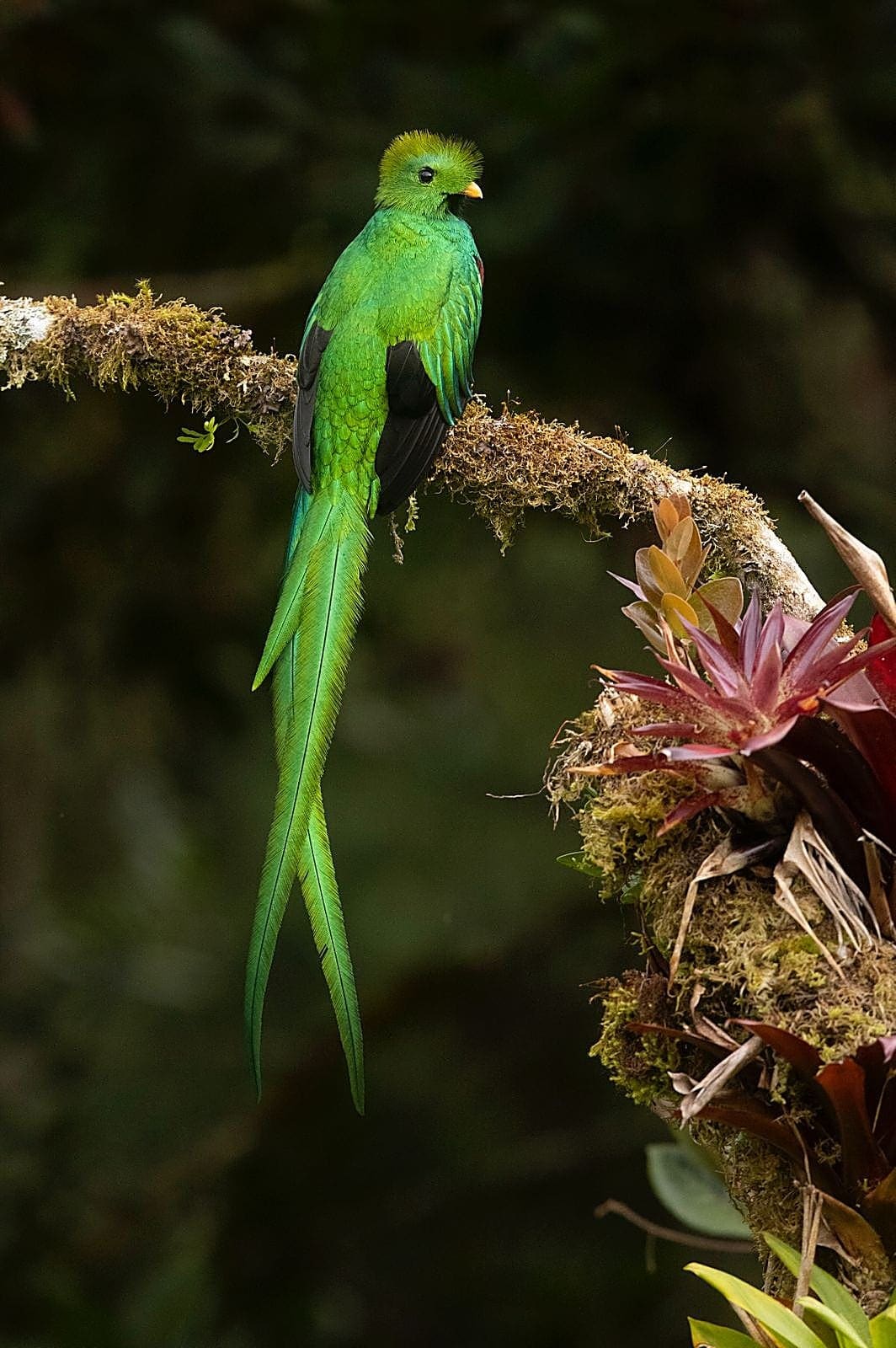
Resplendent Quetzal
Pharomachrus mocinno
The holy grail of neotropical birding. Males have iridescent green tail feathers up to 65 cm long. Not present in La Fortuna itself — they need cloud forest above 1,500 m — but our Valle de los Quetzales full-day tour puts you at a reliable nesting site within 3 hours.
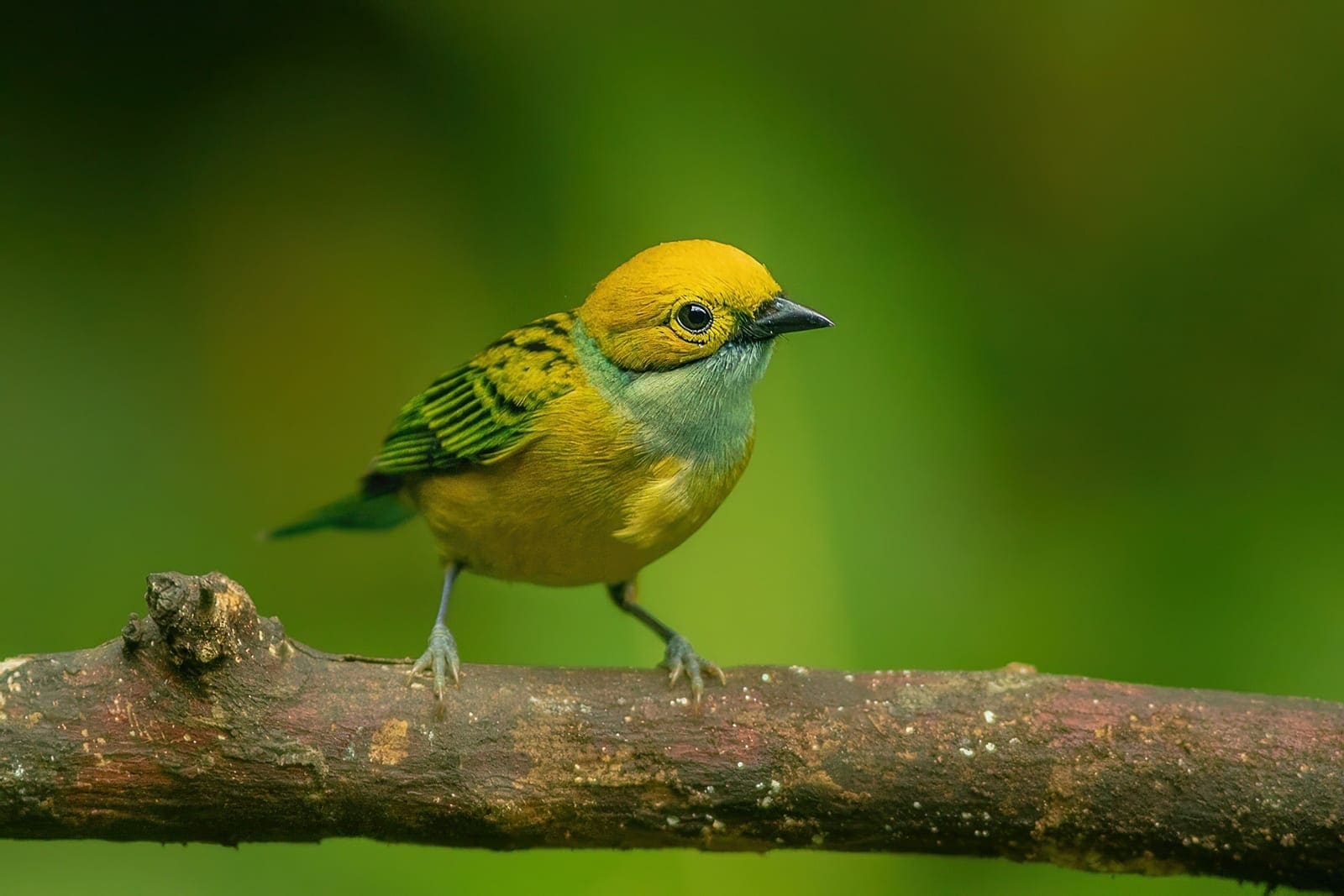
Silver-throated Tanager
Tangara icterocephala
A standout even in a country full of colorful tanagers. The yellow-green plumage and silver throat catch the early morning light beautifully. Usually travels in mixed flocks with other tanagers — finding one often means finding ten species at once.
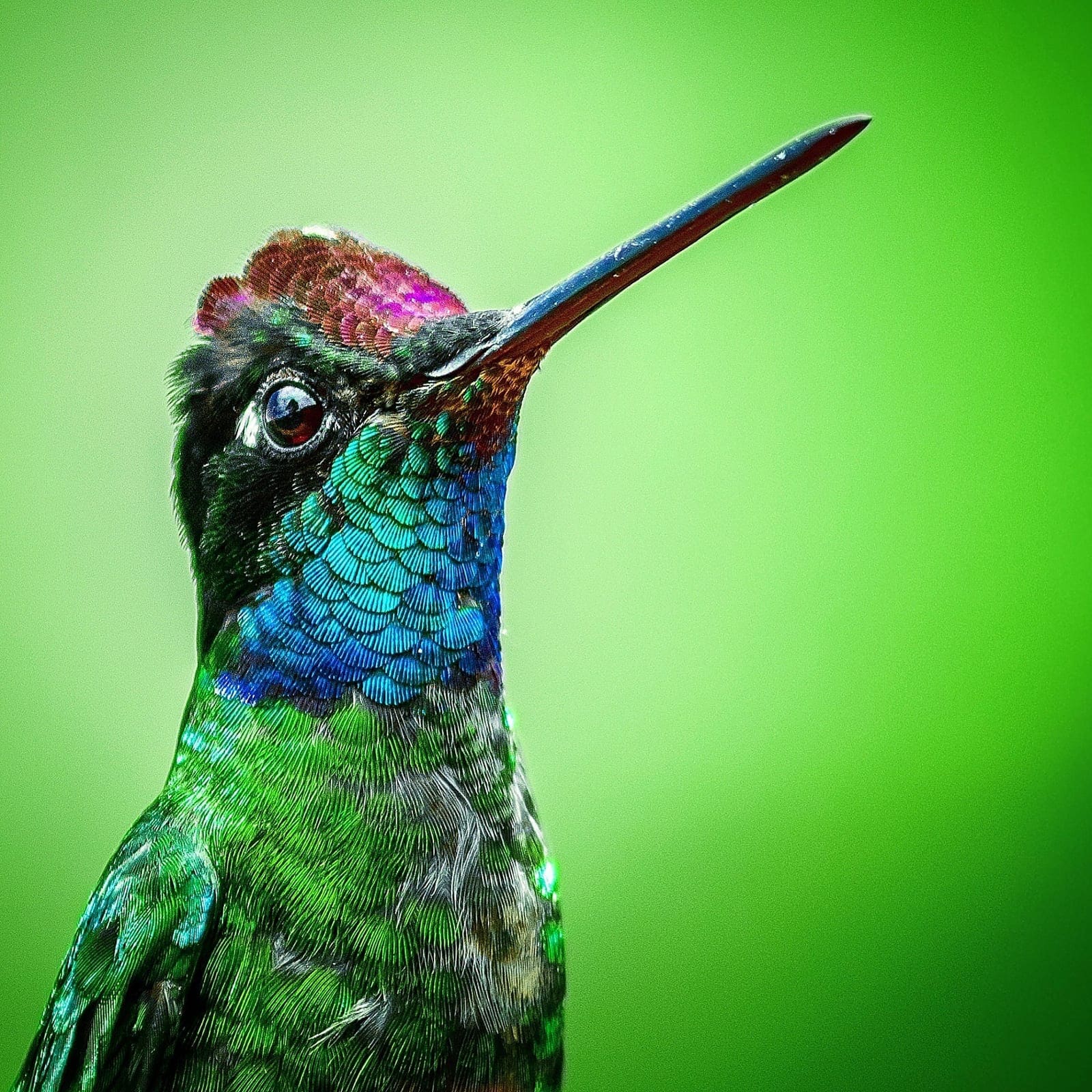
For photographers
We run dedicated multi-flash hummingbird photography sessions at dawn — the same technique used by BBC Wildlife photographers. You leave with frame-ready shots, not travel snapshots. Learn about our photography birding tour →
6 Best Birding Hotspots Near La Fortuna
In order of overall species richness and accessibility. I take clients to all six depending on their goals and fitness level.
Arenal Observatory Lodge & Trails
The single richest birding site near La Fortuna. Private trails at multiple elevations with a natural thermal updraft that brings raptors — including King Vulture — overhead. The lodge garden feeders attract 15+ hummingbird species at peak times.
Book this spot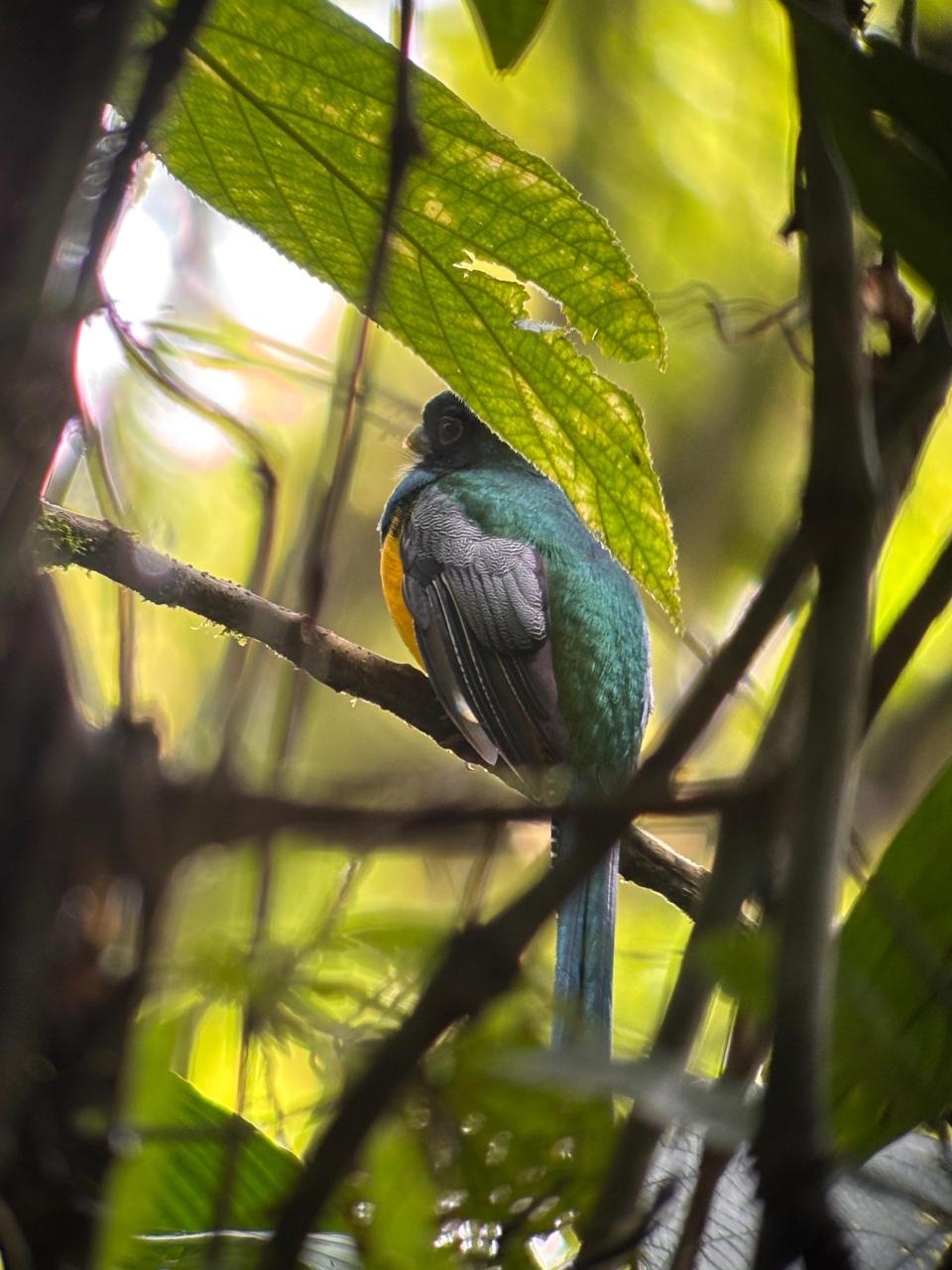
Bogarin Trail
La Fortuna's most underrated spot. A small private reserve bordering a river — the combination of riparian habitat and secondary forest creates exceptional bird diversity in a compact area. Easiest walk for families and photography beginners.
Book this spot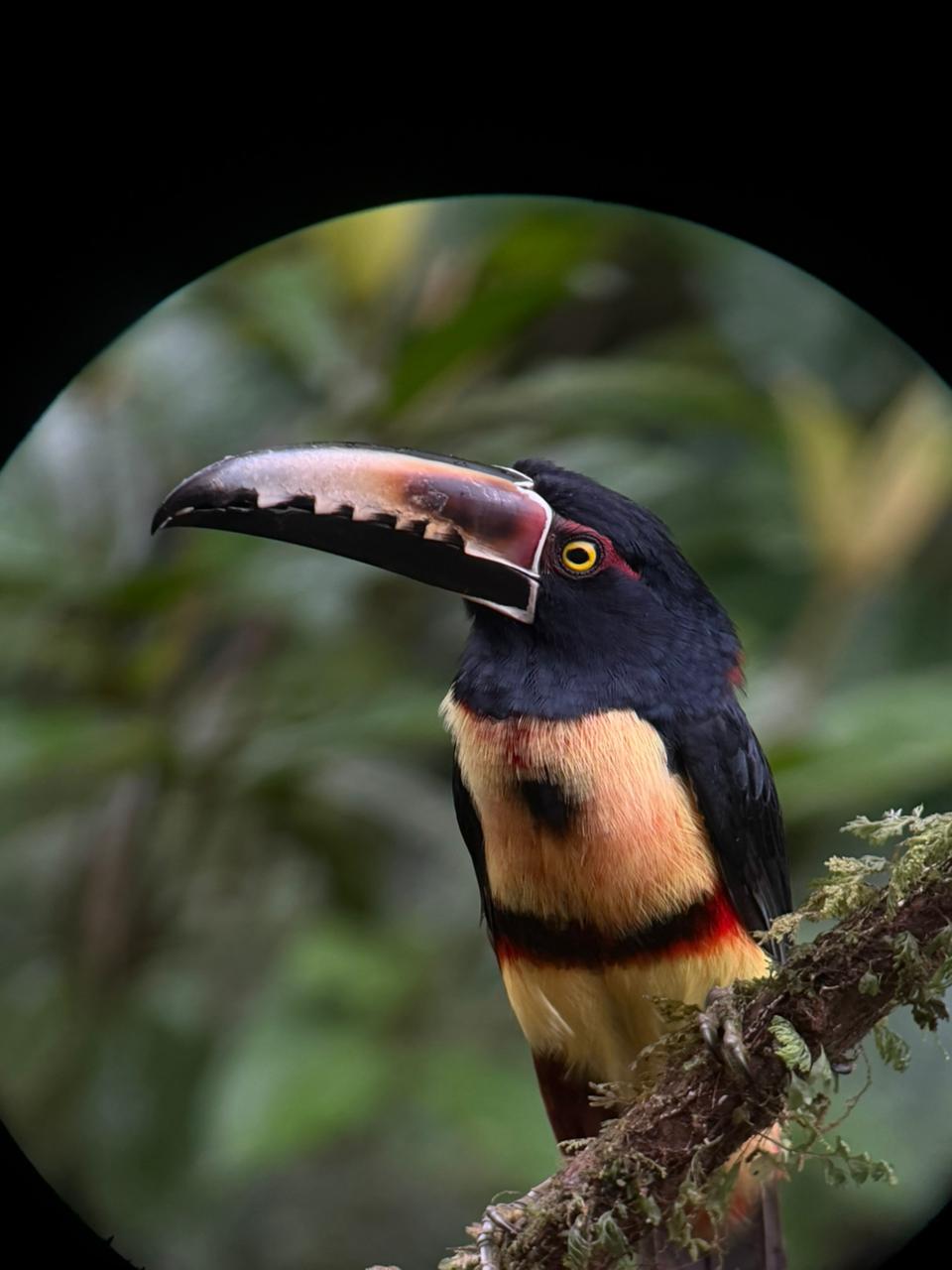
Ecocentro Danaus
A 5-hectare private reserve with wetlands, secondary forest, and gardens. Exceptional for waterbirds and edge species. The only place near La Fortuna where Sunbittern is reliably seen — a spectacular species that's on every serious birder's wish list.
Book this spot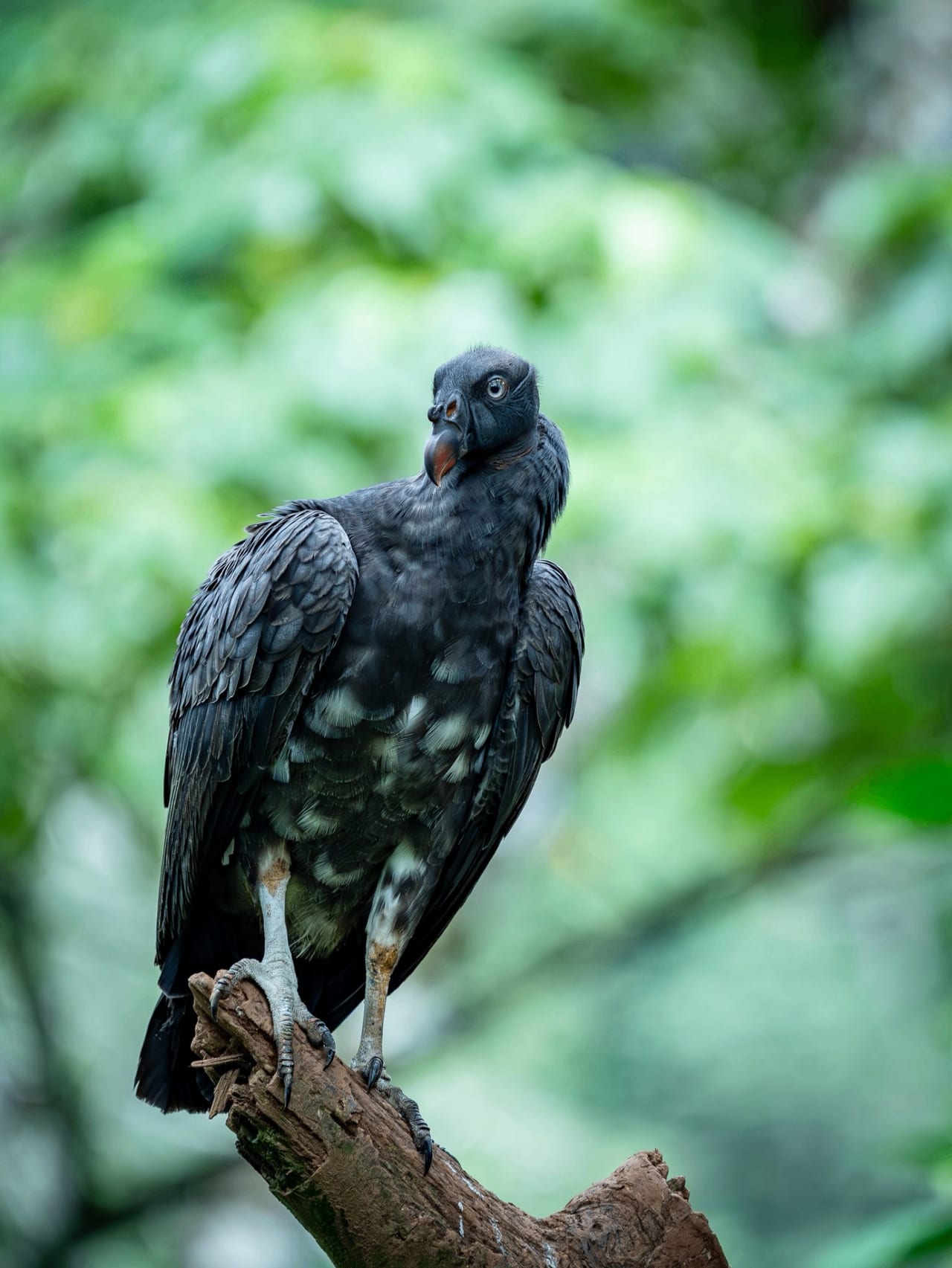
Boca Tapada Expedition
Our most advanced birding destination — a 2.5-hour drive north of La Fortuna into true lowland Caribbean rainforest. This is the stronghold of the Critically Endangered Great Green Macaw. Not for beginners, but an unmatchable experience for serious listers.
Book this spot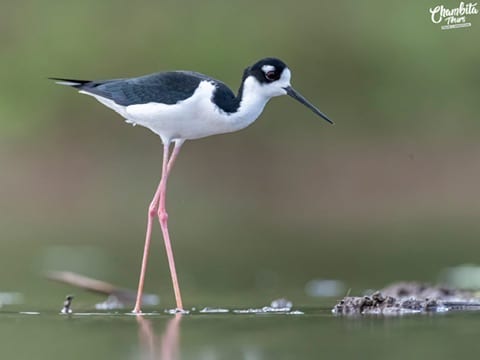
Caño Negro Wildlife Refuge
Costa Rica's top wetland birding site. A 90-minute drive from La Fortuna, this Ramsar wetland is unmatched for wading birds and waterbirds. The Jabiru Stork — tallest flying bird in the Americas — is reliably seen during wet season.
Book this spot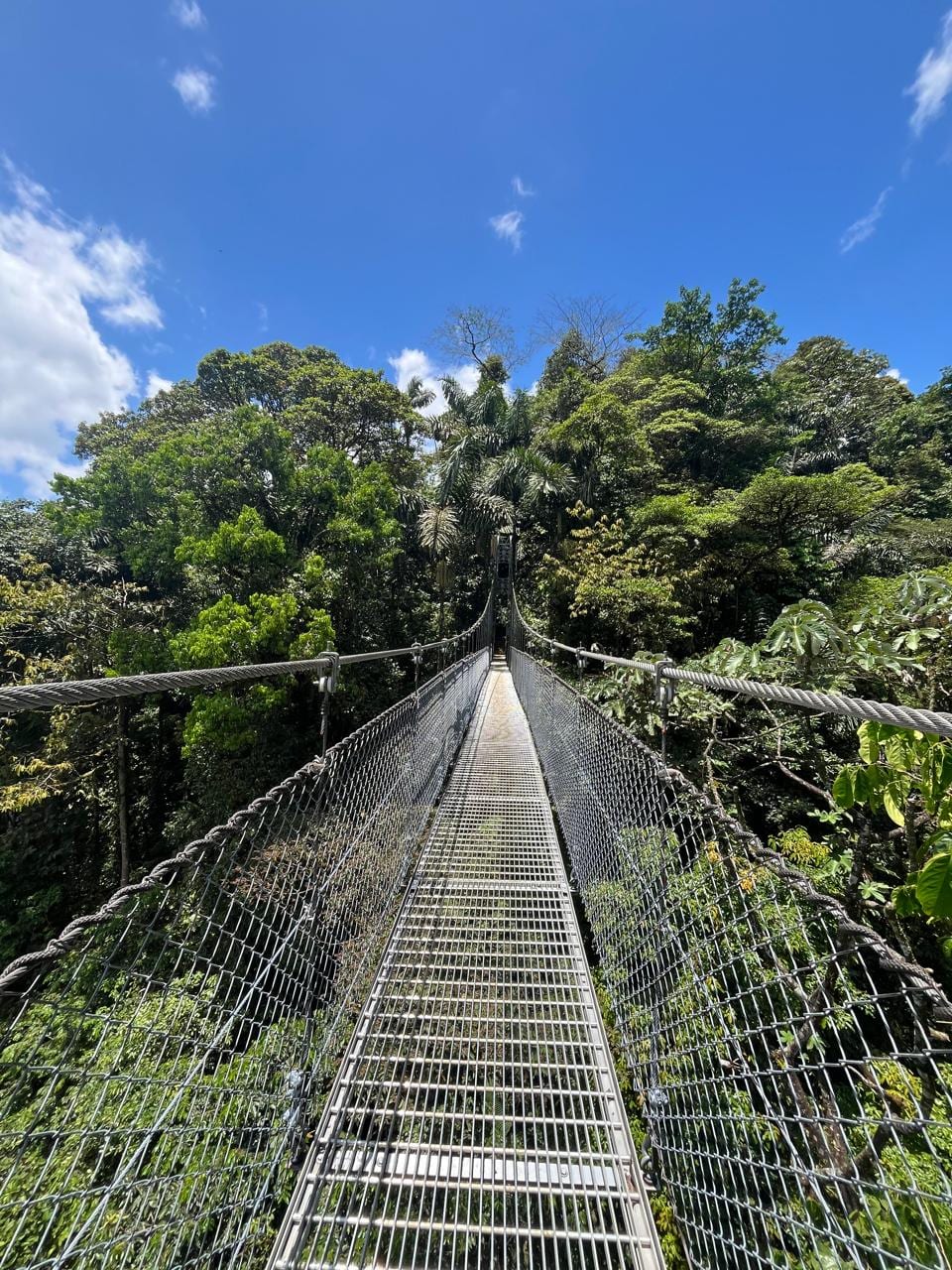
Mistico Hanging Bridges
Walking the canopy on hanging bridges gives you a bird's-eye view — literally. You're at eye level with the mid-canopy where toucans and trogons perch. The Broad-billed Motmot is a near-certainty here, as is the Blue-crowned Motmot.
Book this spot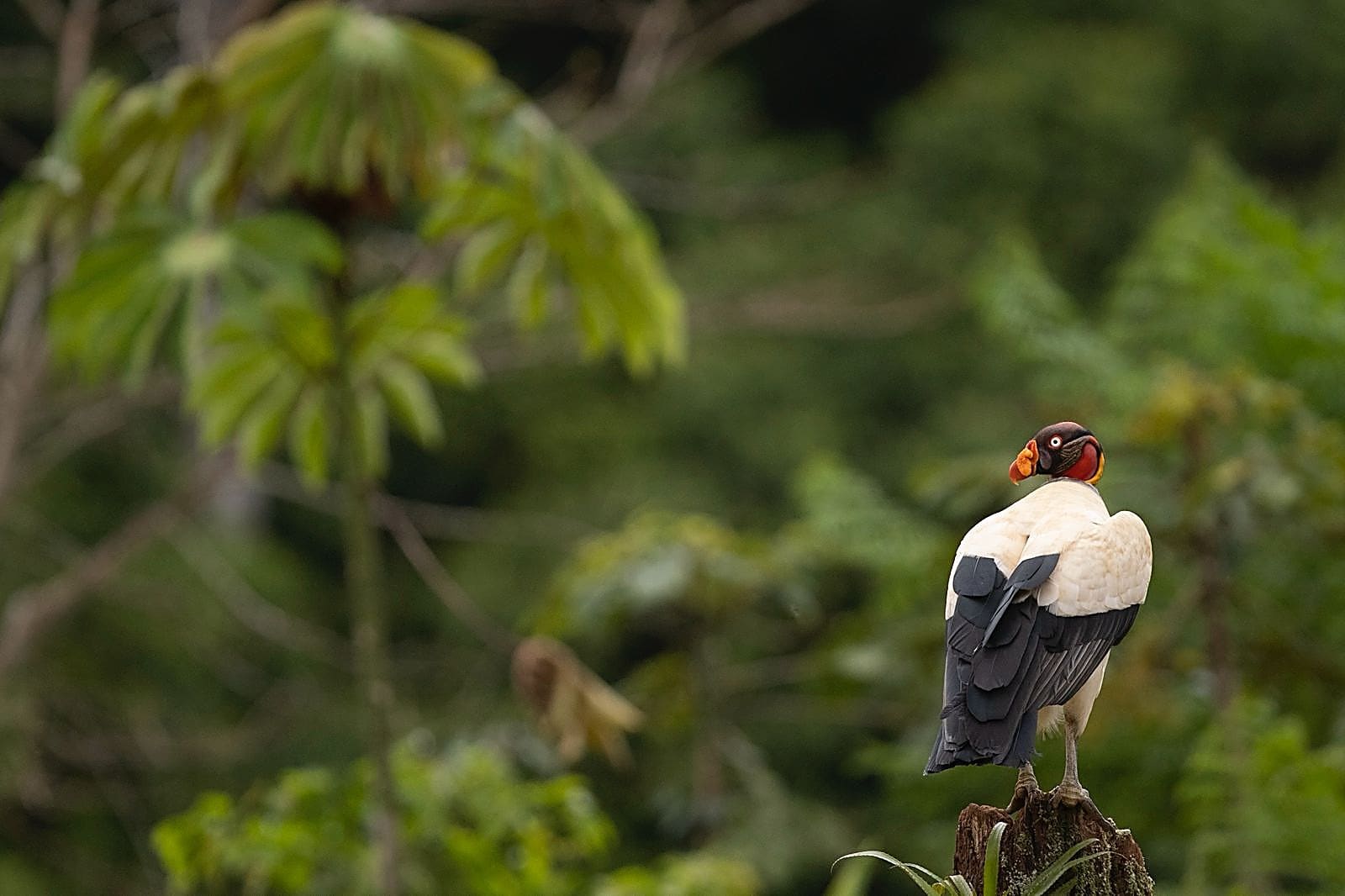
Field note — Boca Tapada
"We were three hours into the trail when the first King Vulture appeared overhead — then four more joined it on the thermal. Two of my clients had been chasing this species for years. The silence when they saw it through the scope was something I won't forget."
— Elias Peña, Naturalist Guide
Best Time to Go Birding in La Fortuna
Dry Season — Nov through Apr
North American migrants arrive: warblers, tanagers, flycatchers, vireos. Resident species are easier to spot with less foliage. Raptors soar on dry-season thermals.
Best for listers aiming for maximum species count.
Green Season — May through Oct
Breeding behavior, nesting activity, colorful mating plumage. Hummingbirds and tanagers at peak activity. Red-eyed tree frogs and glass frogs add spectacle for photographers.
Best for photographers and families. Fewer crowds, lower prices.
Month-by-Month Birding Guide (Arenal / La Fortuna)
Which species are realistically findable each month, and what our guides actually do differently that month. Compiled from our own departure logs around La Fortuna, Boca Tapada and Caño Negro.
January
Dry / peakKeel-billed Toucan, Chestnut-mandibled Toucan, warblers (Chestnut-sided, Tennessee), Broad-winged Hawk
Highest species counts of the year. Book pickups at 5:15 am — activity peaks before 8 am.
February
Dry / peakGreat Green Macaw (Boca Tapada nesting), Sunbittern, Bare-necked Umbrellabird (lucky days)
Macaw nesting starts — the single best month for a Boca Tapada day trip.
March
Dry / peakGreat Green Macaw, King Vulture, Black-crested Coquette, Rufous-tailed Jacamar
Clear mornings, strong thermals: best month for raptors and flight photography.
April
ShoulderNorthbound migrants staging, Yellow-throated Toucan, Golden-hooded Tanager
Migrants leave mid-month. Late April brings the first rains and much greener light.
May
GreenWhite-collared Manakin leks, Montezuma Oropendola colonies, hummingbird display
Breeding behaviour starts. Best month for behaviour photography, fewest visitors.
June
GreenRed-eyed tree frogs (night), Boat-billed Heron, Russet-naped Wood-Rail with chicks
Mornings are usually dry; rain arrives after 2 pm. Pair a morning walk with a night tour.
July
GreenNesting toucans, Collared Aracari, Green Ibis on the Peñas Blancas river
"Veranillo" — a short dry window mid-July. Excellent value, reliable mornings.
August
GreenSungrebe, Agami Heron (Caño Negro), Bat Falcon, mixed foothill flocks
Wetlands are full — Caño Negro boat trips peak for herons and rails.
September
GreenSwallow-tailed Kite passage, resident tanagers, Black-cheeked Woodpecker
Wettest weeks on the Arenal side, but the quietest trails of the year.
October
ShoulderFirst southbound warblers, raptor kettles (Turkey Vulture, Broad-winged, Swainson's Hawk)
Mid-October raptor migration can move tens of thousands of birds in one morning.
November
Dry / peakMigrant warblers settled in, Emerald Tanager, Crested Guan, Great Curassow
Dry season opens. Arenal Observatory feeders and forest edge are at their best.
December
Dry / peakFull migrant + resident overlap: 90–120 species possible in a two-day itinerary
Busiest month — guided departures fill 4–8 weeks ahead.
| Month | Season | Target species | Field note |
|---|---|---|---|
| January | Dry / peak | Keel-billed Toucan, Chestnut-mandibled Toucan, warblers (Chestnut-sided, Tennessee), Broad-winged Hawk | Highest species counts of the year. Book pickups at 5:15 am — activity peaks before 8 am. |
| February | Dry / peak | Great Green Macaw (Boca Tapada nesting), Sunbittern, Bare-necked Umbrellabird (lucky days) | Macaw nesting starts — the single best month for a Boca Tapada day trip. |
| March | Dry / peak | Great Green Macaw, King Vulture, Black-crested Coquette, Rufous-tailed Jacamar | Clear mornings, strong thermals: best month for raptors and flight photography. |
| April | Shoulder | Northbound migrants staging, Yellow-throated Toucan, Golden-hooded Tanager | Migrants leave mid-month. Late April brings the first rains and much greener light. |
| May | Green | White-collared Manakin leks, Montezuma Oropendola colonies, hummingbird display | Breeding behaviour starts. Best month for behaviour photography, fewest visitors. |
| June | Green | Red-eyed tree frogs (night), Boat-billed Heron, Russet-naped Wood-Rail with chicks | Mornings are usually dry; rain arrives after 2 pm. Pair a morning walk with a night tour. |
| July | Green | Nesting toucans, Collared Aracari, Green Ibis on the Peñas Blancas river | "Veranillo" — a short dry window mid-July. Excellent value, reliable mornings. |
| August | Green | Sungrebe, Agami Heron (Caño Negro), Bat Falcon, mixed foothill flocks | Wetlands are full — Caño Negro boat trips peak for herons and rails. |
| September | Green | Swallow-tailed Kite passage, resident tanagers, Black-cheeked Woodpecker | Wettest weeks on the Arenal side, but the quietest trails of the year. |
| October | Shoulder | First southbound warblers, raptor kettles (Turkey Vulture, Broad-winged, Swainson's Hawk) | Mid-October raptor migration can move tens of thousands of birds in one morning. |
| November | Dry / peak | Migrant warblers settled in, Emerald Tanager, Crested Guan, Great Curassow | Dry season opens. Arenal Observatory feeders and forest edge are at their best. |
| December | Dry / peak | Full migrant + resident overlap: 90–120 species possible in a two-day itinerary | Busiest month — guided departures fill 4–8 weeks ahead. |
Birding Hotspot Map by Zone
Filter by zone to see coordinates, driving directions and the species each site is known for. Everything inside Arenal / La Fortuna is reachable as a morning trip from town.
Arenal Observatory Lodge
Great Curassow, Crested Guan, Black-crested Coquette, mixed flocks
Mistico Hanging Bridges
Keel-billed Toucan, Bare-necked Umbrellabird (rare), trogons
Ecocentro Danaus
Boat-billed Heron, caiman, sloths, Sungrebe
Papa's Place Night Tour
Red-eyed tree frogs, kinkajous, owls, snakes (night fauna)
Bogarín Trail
Sloths, Russet-naped Wood-Rail, Black-cheeked Woodpecker
Mariola's Sloth Trail
Sloths, motmots, honeycreepers, easy walking
El Silencio Reserve
Old-growth forest, foothill specialists, mixed-flock activity
Arenal 1968 Trails
Lava trails with hummingbirds, tanagers, volcano views
La Fortuna Waterfall
White-collared Manakin, Black Phoebe along the river
Peñas Blancas River
Sungrebe, Green Ibis, Anhinga, riverside specialties
Maquenque Eco-Lodge
Great Green Macaw, Snowy Cotinga, Pied Puffbird
Laguna del Lagarto Lodge
Great Green Macaw stronghold, fruiting trees, mixed flocks
Caño Negro Wildlife Refuge
Jabiru Stork, Nicaraguan Grackle, Roseate Spoonbill, Anhinga
Medio Queso Wetlands
Pinnated Bittern, Yellow-breasted Crake, marsh specialists
Savegre Hotel & Reserve
Resplendent Quetzal, Long-tailed Silky-flycatcher, Sooty Thrush
Paraíso Quetzal Lodge
Resplendent Quetzal, Fiery-throated Hummingbird, Volcano Junco
Cerro de la Muerte (Páramo)
Volcano Junco, Timberline Wren, high-altitude endemics
Monteverde Cloud Forest Reserve
Resplendent Quetzal, Three-wattled Bellbird, Black Guan
Curi-Cancha Reserve
Quetzal in mixed habitat, Orange-bellied Trogon
Photographed on Our Own La Fortuna Departures
No stock photography and no AI images — every frame below was taken by our guides on a tour we operate. Media and blogs may reuse these with credit: see the birding media kit.
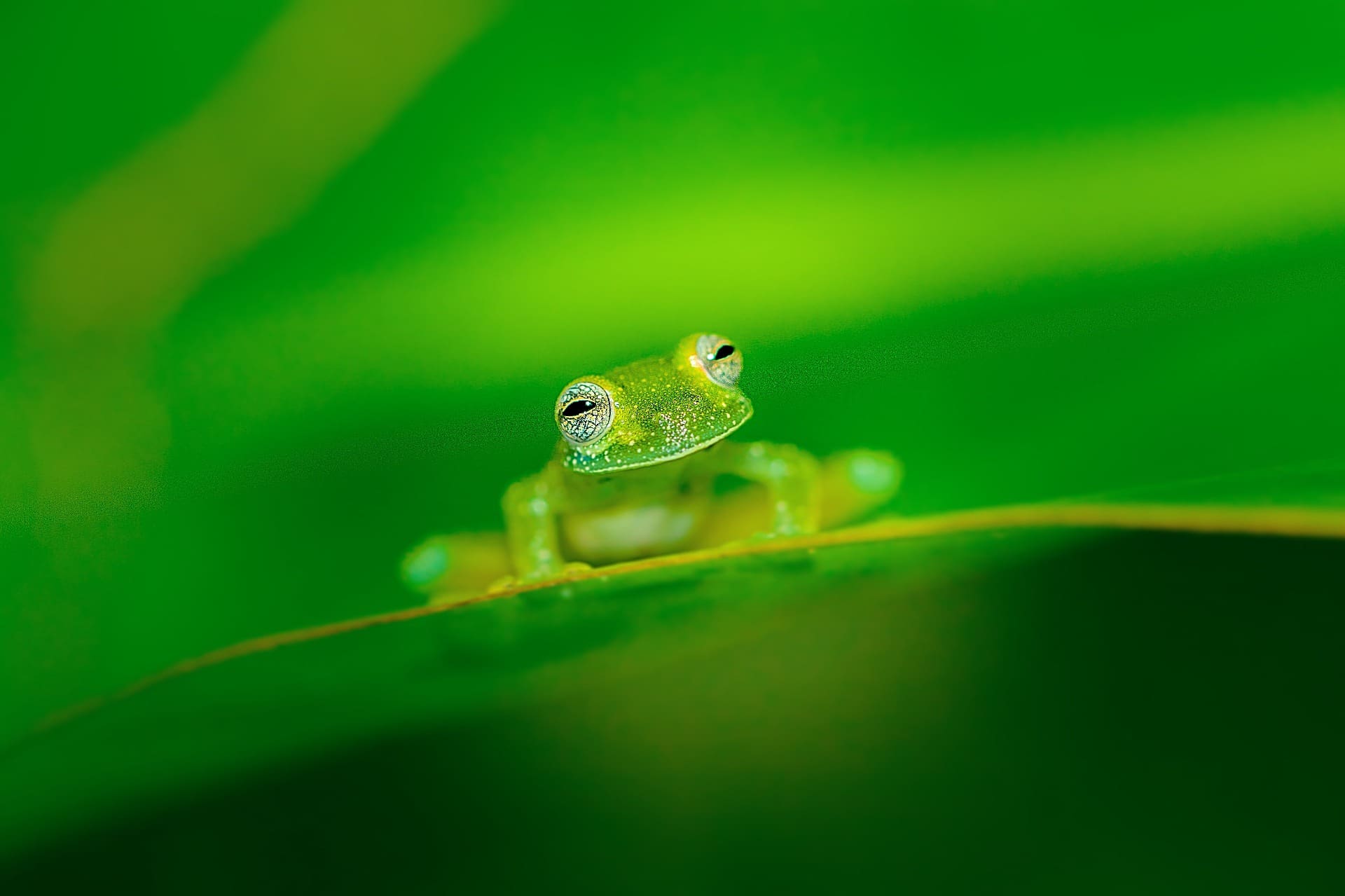
Glass frog on leaf — a green season highlight on our night wildlife tours. © VIVO Expeditions
Frequently Asked Questions
What is the best time of year for birdwatching in La Fortuna?
What time should I start a birding tour in La Fortuna?
How many bird species can I expect to see on a single tour?
Do I need binoculars or will the guide provide equipment?
Is La Fortuna good for bird photography?
Can beginners join birding tours?
Can you see Resplendent Quetzals in La Fortuna or Arenal?
What is the best month to see a Resplendent Quetzal in Costa Rica?
What time of day are quetzals most active?
How likely am I to actually see a quetzal on a day trip from La Fortuna?
Explore all birding tours
Every tour below includes me or Yehudi as your guide — not a subcontracted stranger — plus a high-end spotting scope.